Description
THE PORK
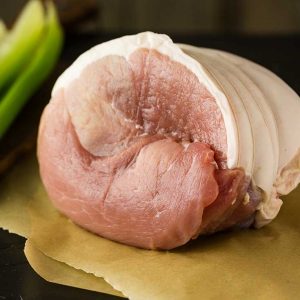
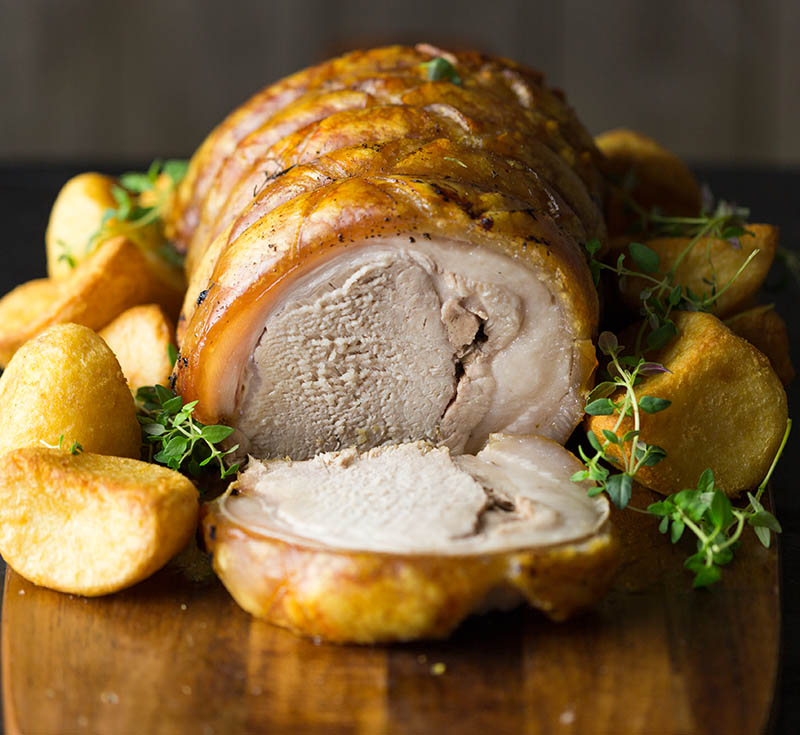
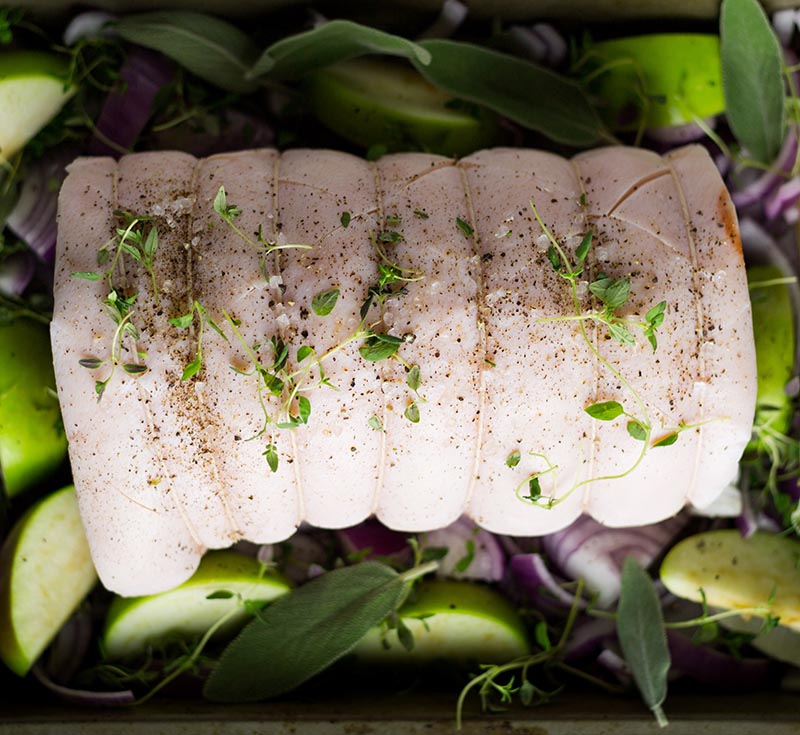
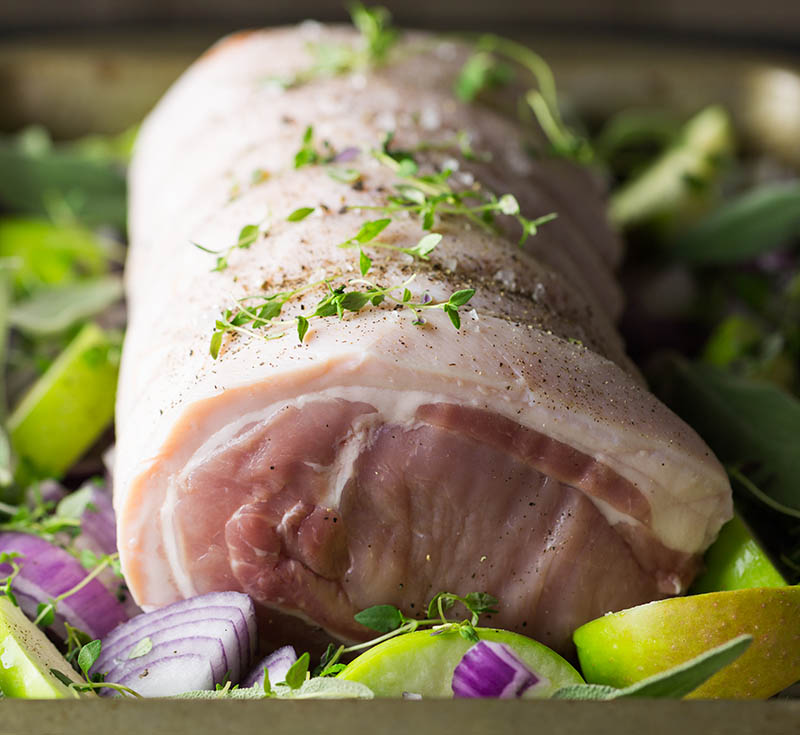
Our rolled loin comes from pork sourced from the Lincolnshire Pork Company — quality British pigs raised to high welfare standards right here in Lincolnshire. The loin benefits from well-managed, consistent breeding and the kind of careful husbandry that produces a joint with good fat coverage, even muscle structure, and a rind that behaves properly in the oven. Our butchers roll and tie each joint on site at Grasmere, scoring the rind and preparing it ready to season and roast.
THE CRACKLING
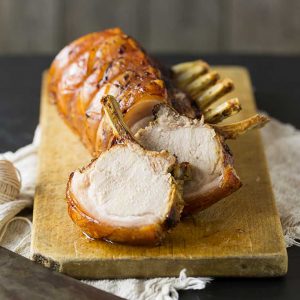
Crackling is not a lottery. It is a technique, and the technique is simple: dry skin, plenty of salt, and high heat at the right moment.
When you take the joint out of the packaging, pat the rind completely dry with kitchen paper. Leave it uncovered in the fridge for at least an hour if you have time — overnight is better. The drier the skin, the better the crackling. When you’re ready to cook, score the rind deeply with a sharp knife at 1cm intervals if it hasn’t been scored already. Rub generously with flaked salt, working it into the scores. Oil the skin lightly — just enough to help the salt adhere.
Follow the cooking method below and the crackling will look after itself.
COOKING YOUR ROLLED LOIN
Take the joint out of the fridge at least 45 minutes before cooking. Season the rind as described above. Place on a rack in a roasting tin, skin side up.
Preheat your oven to 220°C / 200°C fan. Start at high heat for the first 25 minutes — this is what blisters and crisps the crackling. Then turn the oven down to 180°C / 160°C fan for the remainder of the cooking time (20 minutes per 500g, after initial 25 minutes).
Use a probe thermometer for accuracy — ovens vary and size affects cooking time. 70°C at the thickest part of the joint, is what you’re looking for.
Resting:
Rest for a minimum of 15 minutes, loosely covered with foil — but leave the crackling uncovered or it will soften. For a 3kg or 4kg joint, 20–25 minutes is better. The juices redistribute through the meat during resting and you’ll get far more from every slice.
Carving:
Remove the string and slice cleanly across the joint. Break the crackling into pieces and serve alongside — everyone wants a piece and there’s rarely enough of it. That’s just the way it is.
WHAT TO SERVE WITH IT
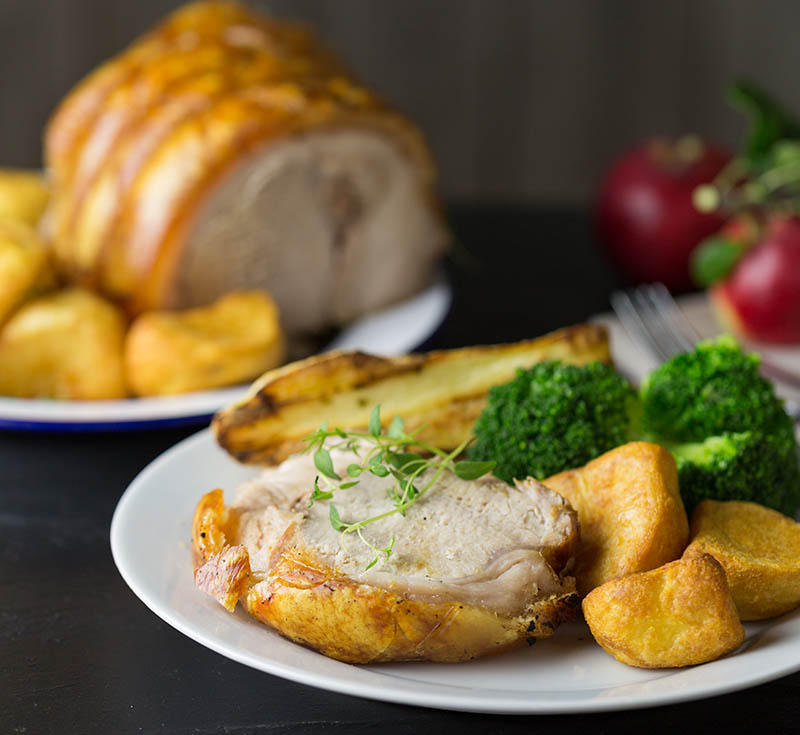
Apple sauce is non-negotiable — the acidity cuts through the richness of the pork in a way that nothing else does. Proper roast potatoes. Roasted parsnips. Sage and onion stuffing alongside. A good gravy made from the roasting juices, deglazed with a splash of cider rather than wine — it suits the pork better.
For a more ambitious accompaniment, try braised red cabbage with apple and cinnamon on the side — it holds beautifully if made ahead and reheats perfectly. Cold leftover loin sliced thin makes an outstanding sandwich with apple sauce, stuffing, and a scraping of English mustard.
For wine, an off-dry German Riesling is the classic pairing for roast pork — the sweetness and acidity both work with the meat. A dry cider from a good producer works just as well, and frankly suits the occasion even better.
STORAGE & DELIVERY
Delivered fresh in chilled packaging. Keep refrigerated and cook within 3 days of delivery. Suitable for freezing — freeze on day of delivery and defrost slowly in the fridge for 24 hours before cooking. For the best crackling, defrost uncovered in the fridge to keep the rind as dry as possible.