Description
THE BEEF
Every fillet we sell starts with the right animal. Ours comes from native breed cattle — Herefords, Longhorns, and other traditional British breeds — sourced from small independent farms across Norfolk and Suffolk. These are farms too small to supply a supermarket, where cattle are raised properly, at their own pace, on East Anglian pasture and marshland grazing that has fed beef cattle for centuries.
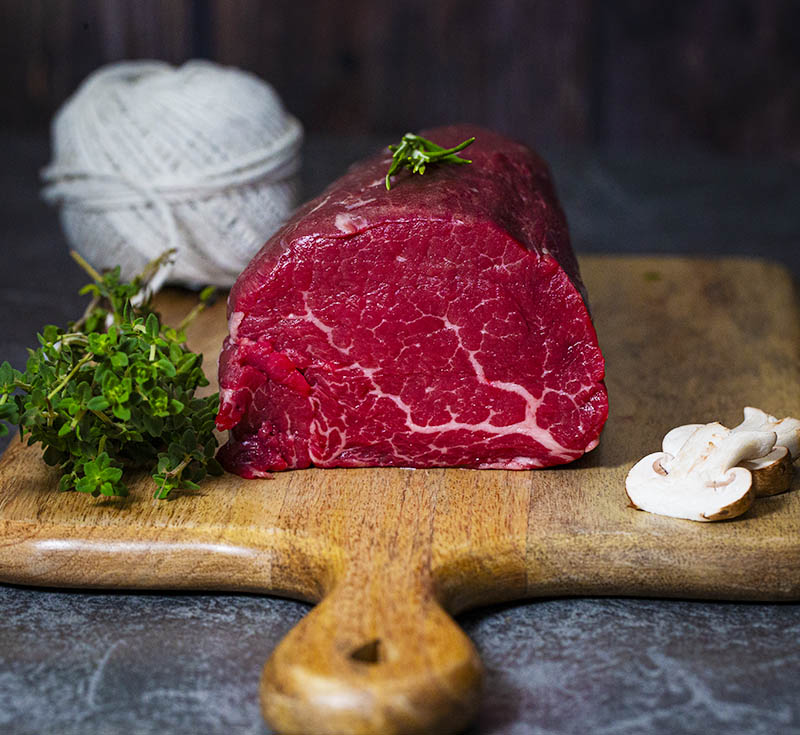
We work with a family-run East Anglian abattoir with 60 years of relationships with these farmers. They hand-select the best animals for us — assessing each carcass for conformation, fat coverage, and the kind of even, well-distributed marbling that tells you the animal has lived well. Full traceability to farm of origin.
The fillet is a lean cut by nature — this is not a heavily marbled steak. What you’re buying is purity of flavour and exceptional tenderness, backed by the provenance and ageing that turn a good fillet into an extraordinary one.
THE AGEING
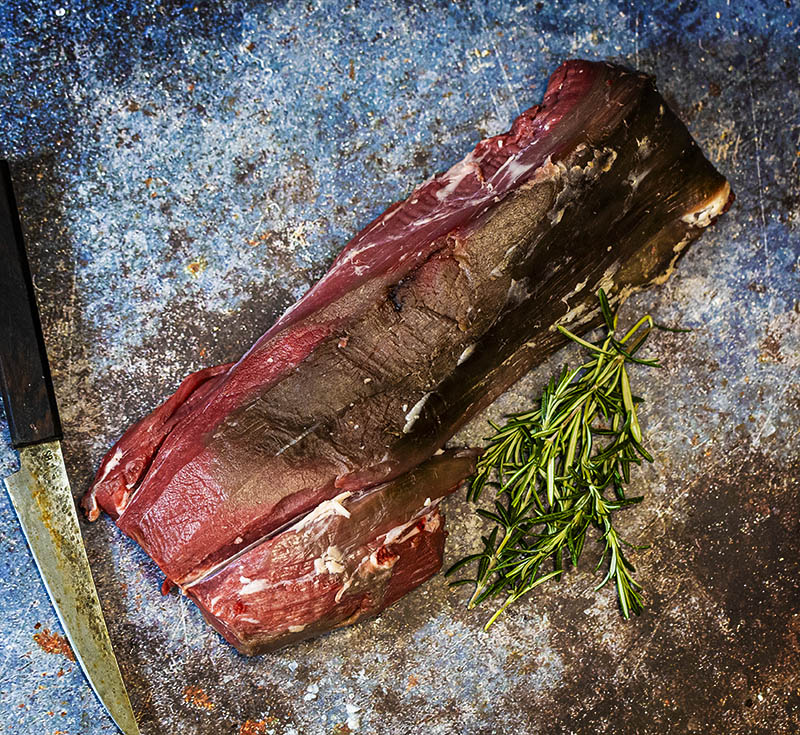
The fillet ages on the carcass for a minimum of 21 days — sometimes up to 28. This is the traditional, correct way to age a fillet. Left inside the ribcage, the surrounding muscle and bone protect it from the drying effects of the ageing environment while allowing the natural enzymatic processes to do their work — breaking down the muscle fibres, concentrating the flavour, and developing the tenderness that makes this cut what it is. Removing the fillet before ageing would give you a different — and lesser — result.
COOKING YOUR FILLET JOINT
The fillet demands precision more than any other joint. It has very little fat to protect it from heat and forgives less than a fattier cut. That said, it is not difficult — it just requires attention.
Take it out of the fridge at least an hour before cooking. Season generously with flaked salt and black pepper all over. If you want to add flavour, tie fresh thyme and a crushed garlic clove to the outside with butcher’s twine — the heat will draw the aromatics into the surface of the meat as it cooks.
Searing:
Get a heavy pan — cast iron if you have it — properly hot. Oil the joint, not the pan. Sear hard on all sides until you have a deep, even brown crust all over — don’t rush this, it takes 3–4 minutes per side and it’s where much of the flavour comes from.
In the oven:
Transfer to an oven preheated to 200°C / 180°C fan. Roast using a probe thermometer — this is the only reliable method for a fillet:
For rare: 48–50°C.
For Medium rare: 52–55°C
For Medium: 58–60°C
Pull the joint from the oven 3–4°C below your target temperature — it will continue to rise as it rests. As a rough guide, a 1kg fillet at medium rare will need around 15–20 minutes in the oven after searing, but trust the probe over the clock every time.
Resting:
Rest for at least 15 minutes, loosely covered. For a 1.5kg joint, 20 minutes is better. Do not skip this step — a fillet that hasn’t rested will lose its juices the moment you carve it.
Carving:
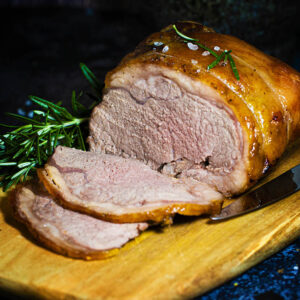
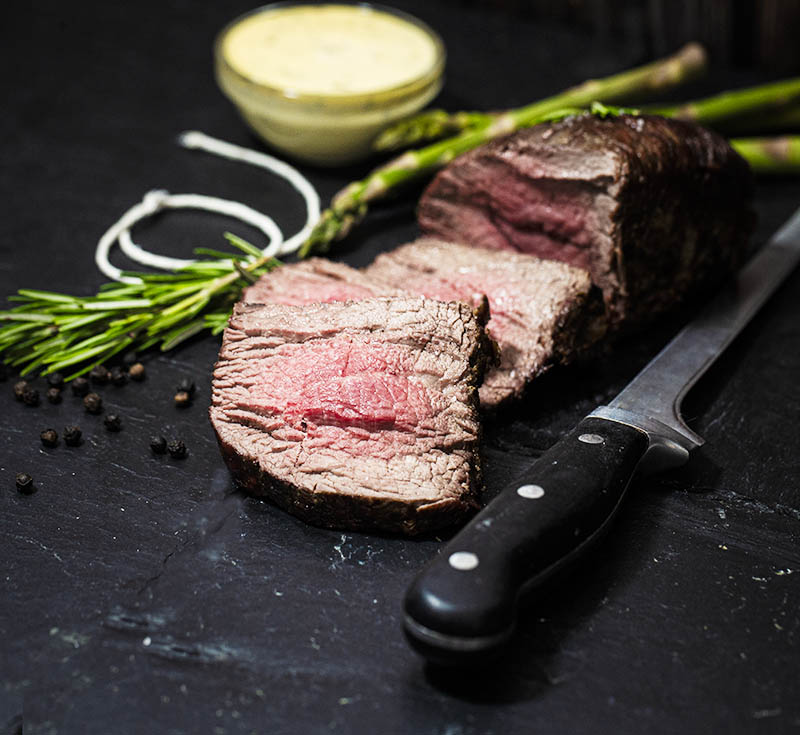
Slice across the grain into even rounds — the thickness is a matter of preference, but 2–3cm gives you a slice with presence on the plate. A sharp carving knife, no sawing.
WHAT TO SERVE WITH IT
The fillet is an occasion cut. Keep the accompaniments in proportion to the main event.
Dauphinoise potatoes are the natural partner — rich, creamy, and patient enough to sit in the oven while you finish the beef. A simple green salad or some wilted spinach with garlic on the side. For sauce, a classic béarnaise is the answer — buttery, tarragon-forward, and built for fillet. A red wine reduction made from the roasting pan juices is the simpler option and just as good.
For wine, reach for something with elegance rather than weight — a Pinot Noir from Burgundy, a good Pomerol, or a restrained Barolo. The fillet’s delicacy is easily overwhelmed by a very heavy red.
STORAGE & DELIVERY
Delivered fresh in chilled packaging. Keep refrigerated and cook within use by on product. Suitable for freezing — freeze on day of delivery and defrost slowly in the fridge for 24 hours before cooking. Never defrost at room temperature.