Description
| Size | Serves | Price |
| 1.35kg | 3–4 | £18.25 |
| 2.7kg | 6–8 | £25.00 — save over 30% |
| 4kg | 10–12 | £54.00 |
THE PORK
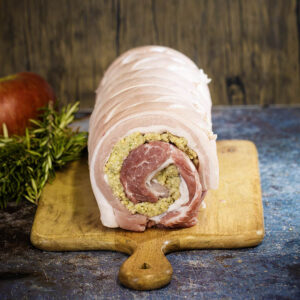
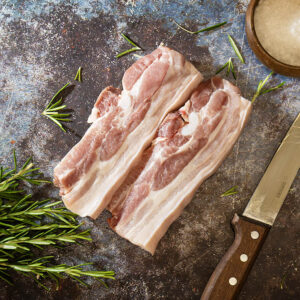
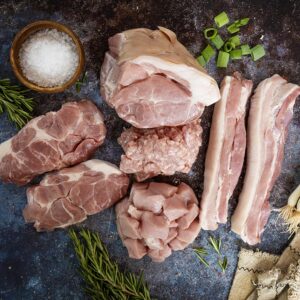
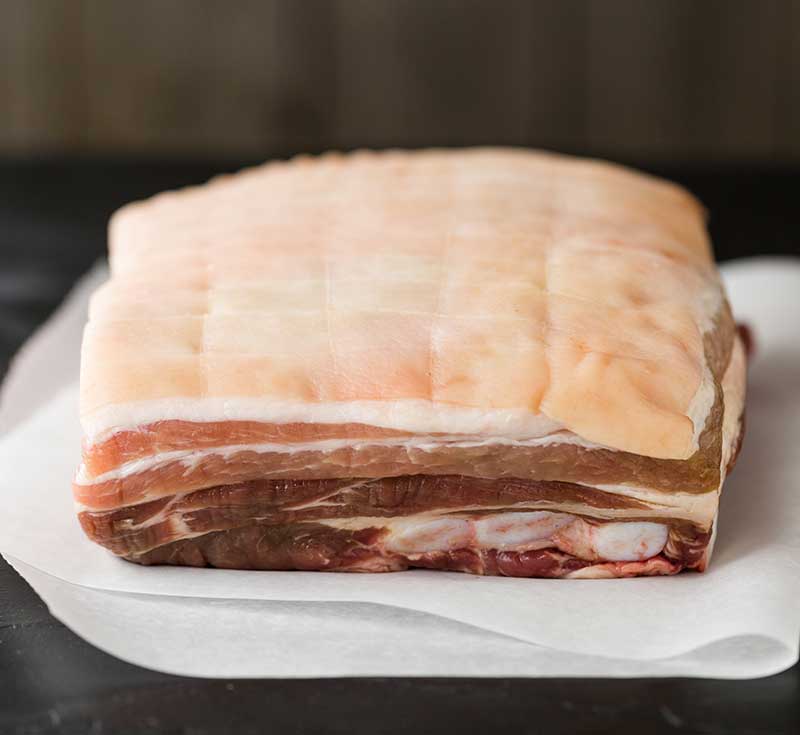
Belly is the most layered cut on the pig — alternating fat and meat running through from top to bottom, with the skin above and the bones below. That structure only comes from pigs that have been raised slowly and fed well. Ours comes from the Lincolnshire Pork Company, raised to high welfare standards here in Lincolnshire. Our butchers prepare each piece on site at Grasmere Farm.
THE CRACKLING
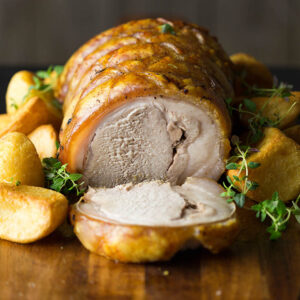
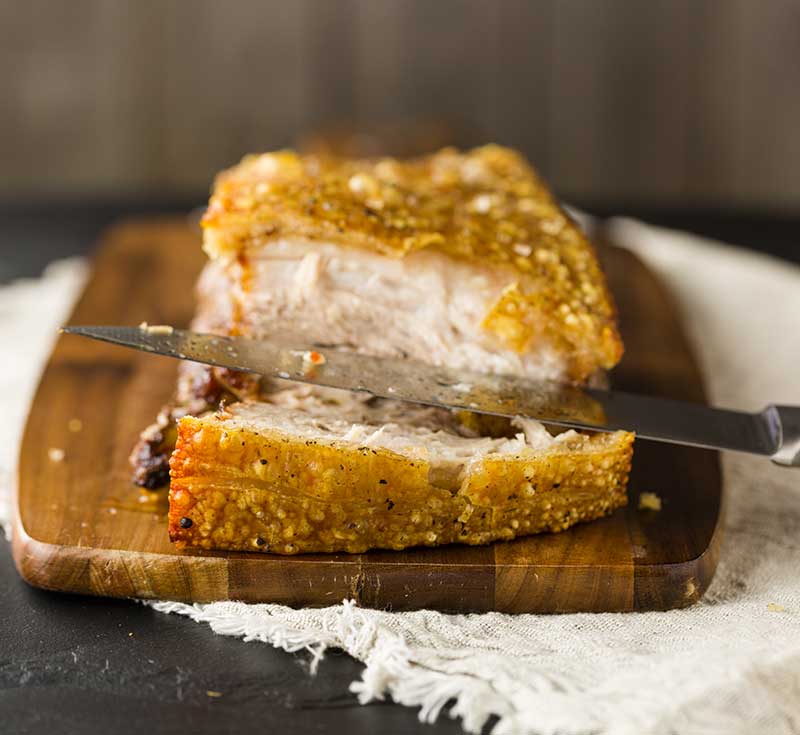
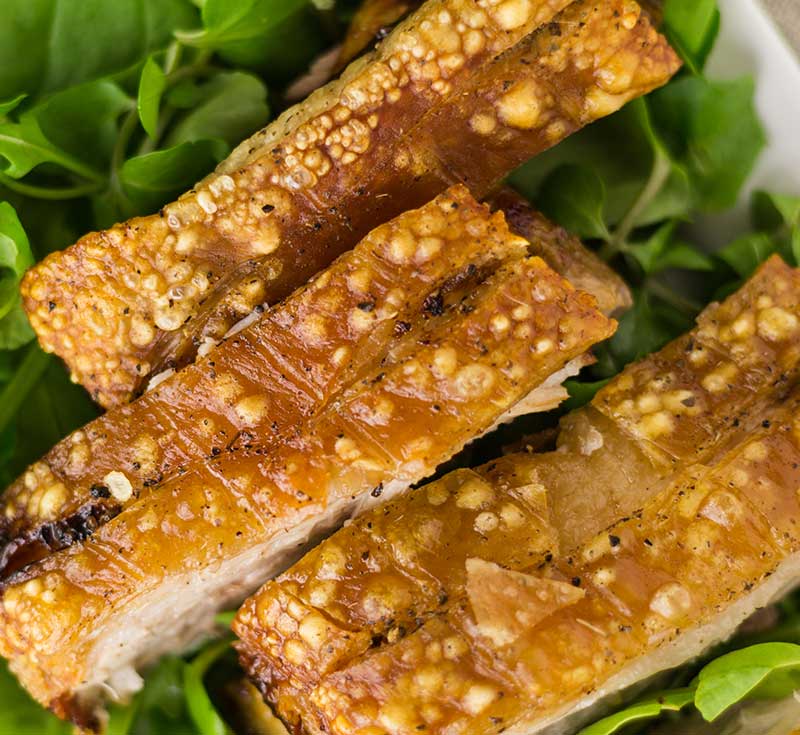
Dry skin gives great crackling. Pat the rind completely dry with kitchen paper when you take it out of the packaging — if you have time, leave it uncovered in the fridge overnight. Rub generously with flaked salt, working it into the scores, and add a light film of oil. The high-heat start in the cooking instructions below does the rest.
COOKING YOUR PORK BELLY
Take the joint out of the fridge at least an hour before cooking.
Preheat your oven to 220°C / 200°C fan. Place the belly skin side up on a rack in a roasting tin. Roast at high heat for 30 minutes to blister and begin crisping the skin. Then turn the oven down to 160°C / 140°C fan and continue cooking low and slow.
| Size | Low and slow cooking time (after initial 30 minutes) |
| 1.35kg | 2–2.5 hours |
| 2.7kg | 3–3.5 hours |
| 4kg | 3.5–4 hours |
Internal temperature of 70°C at the thickest part of the meat, away from the bone, before resting. The belly is forgiving — it won’t dry out if you give it longer at low heat, and the extra time only improves the texture of the meat beneath the crackling.
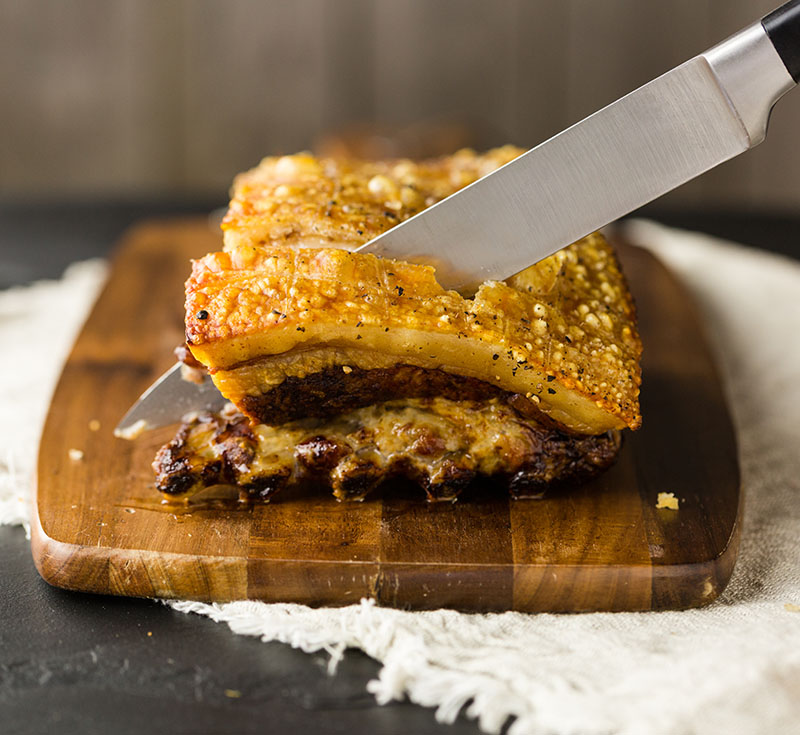
Rest for at least 20 minutes, crackling uncovered, before carving. Carve across the joint into thick slices, each one with a section of crackling on top. Remove the bones beforehand if you want to slice cleanly through, or leave them in and let people pick at them — both are perfectly valid approaches.
WHAT TO SERVE WITH IT
Apple sauce alongside is essential — the sharpness cuts through the richness of the belly in a way that nothing else does. Roasted new potatoes or dauphinoise. Something green and sharp — braised red cabbage with apple and cider vinegar, or wilted greens with garlic. A good gravy made from the roasting juices, deglazed with a splash of cider.
For a more relaxed approach with the larger joints — pull the meat apart after the long slow cook rather than carving, shred it, and serve with good rolls, coleslaw and our Red Onion Marmalade. The bones lift out cleanly once the meat is tender enough to pull.
Cold leftover belly sliced thin the next day is one of the better things a Sunday roast leaves behind.
STORAGE & DELIVERY
Delivered fresh in chilled packaging. Keep refrigerated and cook within the use by on pack. Suitable for freezing — freeze on day of delivery and defrost slowly in the fridge for 24 hours before cooking. For the best crackling, defrost uncovered in the fridge to keep the rind as dry as possible.